
If you have searched for “AI website builder” or “cheap website development,” you have probably seen big promises. Some say AI can build a full website in minutes. Others say you no longer need a developer.
AI has changed web development, but not in the way many new business owners think. This guide explains what AI can do, what it cannot, and how to choose between WordPress or Shopify without overspending.
How AI Has Changed Web Development
AI tools have made many parts of building a website faster. Developers now use them for:
- Drafting page layouts and first-pass designs
- Generating starter code and fixing small bugs
- Writing first drafts of product descriptions and page copy
- Compressing images and speeding up repetitive tasks
- Automating testing and routine updates
This saves time, and saved time can mean a lower cost for you. That is the real benefit for small businesses: a better result for a smaller budget.
What AI Cannot Do for Your Website
Many new clients assume AI can finish the whole project. In practice, a business website involves many decisions that need human judgment:
- Strategy: Who is your customer, and what should they do on your site?
- Custom features: Booking systems, multi-vendor marketplaces, special pricing rules, or custom dashboards
- Integrations: Connecting your CRM, payment gateway, shipping tools, and accounting software
- Brand-specific design: A site that looks like your business and not like a template
- Security and performance: Protecting customer data and keeping pages fast
- Ongoing support: Someone to call when something breaks
AI is a strong assistant. It is not a replacement for an experienced team that understands your business goals. The best results come from developers who use AI to work faster while still doing the thinking, testing, and quality control.
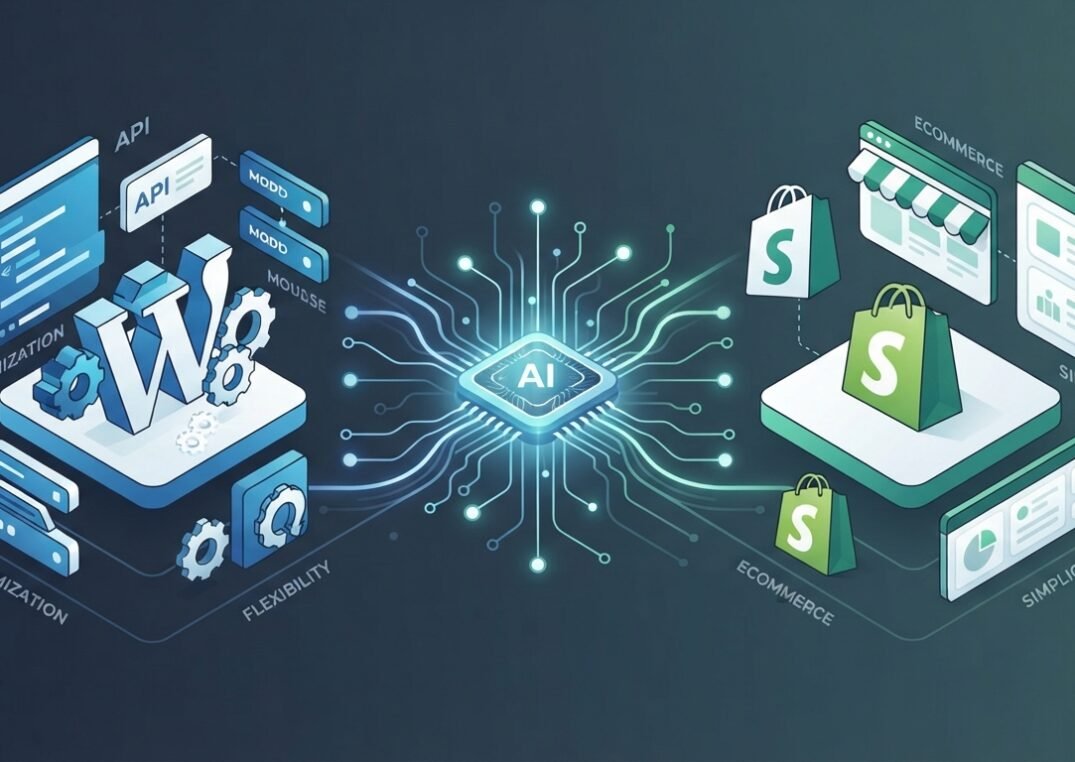
WordPress or Shopify: Which Should You Choose?
This is one of the most common questions from new clients. The honest answer is that it depends on what you sell and how you plan to grow.
Choose WordPress if:
- Content, blogging, and SEO are a big part of your strategy
- You are building a service business, portfolio, or company website
- You need unusual features that standard stores don’t offer
- You want full control over design, hosting, and data
- You may want to combine your site with a custom system later
WordPress is flexible, and with custom development it can do almost anything. It also works well with WooCommerce if you want to sell products.
Choose Shopify if:
- Your main goal is to sell physical or digital products online
- You want a fast, reliable store with less technical maintenance
- You want built-in checkout, inventory, and payment tools
- You plan to scale a product brand quickly
Shopify handles hosting, security, and checkout for you, which is a big advantage for product-focused businesses. A custom theme can then make the store look and feel unique.
Quick comparison
| WordPress | Shopify | |
|---|---|---|
| Best for | Content sites, service businesses, custom platforms | Online stores and product brands |
| Flexibility | Very high | High within the ecommerce model |
| Maintenance | You or your developer manage updates | Mostly handled by the platform |
| SEO and blogging | Excellent | Good |
| Ecommerce | Possible with WooCommerce | Built for it |
Do You Need Custom Development or a Ready-Made Template?
A template can be a good starting point if your needs are simple and your budget is tight. But templates often limit you. Common problems include slow loading, bloated plugins, and designs that look like thousands of other sites.
Custom development makes sense when:
- Your business has a process that standard plugins can’t handle
- You want a unique design that supports your brand
- You need speed, clean code, and long-term scalability
- You want a site built to rank in search from day one
Custom does not always mean expensive. A smart approach is to start with the features that matter most and add more as your business grows.
How to Get Better Results on a Low Budget
If you are searching for affordable web development, these steps can help:
- Start with a clear goal. Decide whether your site is for leads, sales, bookings, or information.
- Launch with the essentials. Build the pages and features you need now, and plan upgrades for later.
- Choose the right platform first. Switching from WordPress to Shopify later, or the reverse, costs more than choosing well at the start.
- Use AI where it helps. Draft content and ideas with AI, then have a professional review them.
- Don’t skip SEO and speed. A cheap site that loads slowly and doesn’t appear in search won’t bring customers.
- Work with a team that offers support. A site needs updates and fixes after launch.
Real Examples of Custom Work
At WEBGENIQ, we use WordPress and Shopify as the foundation and customize them to fit each business:
- We built a Shopify store for a growing CPG brand from custom Figma designs, using a fully custom Liquid theme.
- We combined WordPress with a Core PHP system for a multi-vendor outdoor gear rental platform, which needed more than a standard CMS could offer.
You can learn more about our CMS and ecommerce solutions or our custom websites and web applications.
Frequently Asked Questions
Can AI build my entire website for me?
AI can create a basic draft quickly. But a business website needs strategy, custom features, integrations, security, and testing, which still require experienced developers.
Is WordPress cheaper than Shopify?
It depends. WordPress can be cost-effective for content-focused sites. Shopify can be more cost-effective for stores that want built-in ecommerce tools. Compare the total cost, including themes, apps or plugins, hosting, and maintenance.
Can I move from WordPress to Shopify later?
Yes, but it takes planning and migration work. It is easier to choose the right platform at the start.
Will my website be SEO-friendly?
It should be. Good development includes clean code, fast loading, mobile responsiveness, and a search-friendly structure from the beginning.
Do I need custom development if I have a small business?
Not always. Many small businesses start with a lightly customized setup and expand over time. A short consultation can show you what is worth building now and what can wait.
Final Thoughts
AI is making web development faster and more affordable, but it works best when guided by people who understand your business. Whether you choose WordPress or Shopify, the goal is the same: a website that is fast, easy to manage, and built to bring in customers.
Not sure which platform fits your budget and goals? Book a free strategy call with WEBGENIQ and we will help you choose the right path.